Know The Ropes Of BASIX And NABERS Certificate

Securing the environment and facilitating a healthy environment for living is the topmost important thing for an individual. Urbanisation has affected the environment, significantly which in return gave rise to health hazards and an increase in house expenses.

But ever since people started shifting towards a healthier lifestyle, they have also started paying attention to the high percentage of carbon emissions in society. People realised their responsibility of saving the environment which was affected by every new building constructed, be it residential or commercial. With the advent of BASIX and NABERS, residents of New South Wales are striving to achieve a 6-star energy efficiency rating.

These ratings, along with contributing towards a healthy environment, also contributes to long-term financial savings for the house owner and his/her family.
This piece of content discusses BASIX and NABERS certificate in detail. Keep reading further if you want to know more.

BASIX certificate:

It is a compulsion for house owners building a new house or renovating an old one to undergo BASIX assessment. The value of the property should be about $50,000 to your current property. This assessment in NSW aims to reduce greenhouse gas emissions and reduce energy and water consumption.

The assessment is done against sustainability standards that are set as an average benchmark of the homes in the locality by the official association. You need to submit plans and development papers to the council for approval. Your building should be able to meet the specific targets for a BASIX certificate .

Based on the house design and development plan, things that will be assessed are as follows:

  • It shall be checked if the bathrooms and kitchens have fittings & fixtures and acceptable water-saving ratings.

  • Every nook and corner where you are planning to store water shall be assessed be it in a spa, swimming pools, waste-water system and planning etc.

  • The house shall also be checked for alternative water supply in the building.

  • Next is, the energy efficiency of the house, including the building material, window glazing, slab & house size shall be assessed.

There is more on the list of BASIX, but the above-mentioned points are the key things that will be checked during the assessment.

NANABERS Certificate:

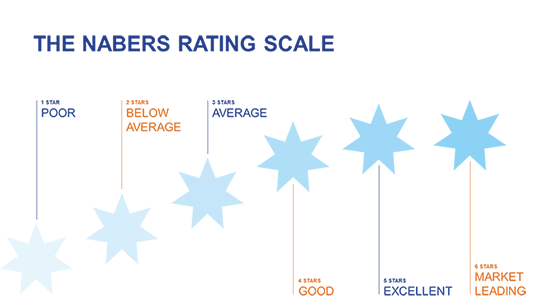
The National Australian Built Environment Rating System measures the impact of new commercial or residential buildings in Australia on the environment. The rating is given in the form of star and ranges between 1 to 6 stars. 6-star house rating is considered the most energy-efficient house.

NABERS rating is followed nationally in Australia by the officials of Commonwealth, territory and state government. You can apply for an online assessment using tools. The values of the utility bills and waste consumption are compared against the existing benchmark in the system.

NABERS assesses the following things:

  • Energy efficiency with and without Greenpower;
  • Carbon emission;
  • Water utility;
  • Waste management in the building;
  • Indoor environment quality

You can improve your NABERS score by installing LED lights and enhancing the glazing of the windows. You can go for double glazing that improves installation and also boosts the energy performance of the house. The next level of making the house energy efficient is by installing solar panels at home.

You can also hire a BASIX Report consultant who would help you in getting through the processes.

Application of Section J in Boarding Houses

BASIX certificate

There is always a confusion regarding boarding houses and it always starts with the local council.

In this blog, we have discussed in which class Section J is applied. Have a look!

Section J is recognised as the energy requirement of the building code and it is applied to Class 2 to Class 9 buildings. The provision is mostly affected during construction certificate. For instance, it is used when DA has been published.

BASIX is a separate certificate used for extensive sustainability and a set of controls that are applicable in NSW and concerns to Class 1,2, 4 buildings.

In majority cases, a boarding house is categorised for Class 3 building which is affected by Section J. However, we always notice the council demand BASIX certificate in a particular situation. 

The confusion is created in Class 1b building which is for small boarding houses. They are less than 300m² area and a maximum of 12 people can be accommodated there. For class 1b building developments, BASIX Certificate is required. 

If a boarding house covers more area than 300m² and accommodates more than 12 people, it comes under a Class 3 building. Thus, here Section J will be required and not BASIX.

If like many you are also confused between the two, it becomes crucial to ask a building code consultant or a certifier to confirm the class you are building. 

There would come a situation that the council officer may ask you to get a BASIX certificate, you can explain them this concept. But before anyone, you must know the entire certification procedure and difference between BASIX and BCA Section J report.
You can also visit the Eco Certificates to know the exact meaning and use of these certificates. They provide reliable services pertaining to building sustainability and energy efficiency.

Get Latest Information on NABERS Ratings

NABERS Water Ratings

NABERS ratings give an implication of the operational sustainability of a building. Separate NABERS are also available for various environmental issues and different building types.

  • Office or Tenancy- NABERS Waste, NABERS Energy and NABERS Indoor Environment
  • Offices, Building and Base- NABERS Waste, NABERS Indoor Environment, NABERS Water, NABERS Energy
  • Retail Shopping Centres- NABERS Energy and Water 

In the market place, NABERS Energy and Water Ratings are very crucial. NABERS Energy base building ratings for offices are compulsory for the building that are undergoing lease or sale deals of spaces greater than 2000m².

Why are they Useful?

A Nabers rating describes the environmental performance on the basis of star scale where 6 star is exceptional, 5 stars is leading, 3 stars is average, 1 star is considered to be the poorest of them all. Besides that, these ratings are not based on theory but the measurement, so they reveal the real environmental performance. It also lays emphasis on NABERS Water Ratings in order to save water plus electricity. By transforming a complex technical object into a simple star rating, NABERS makes it easier for the common people to know the environmental performances while estimating the building for lease or sale.

Issues to be Considered

NABERS ratings are only valid up to one year, so the current ratings are important if it provides information about the building. Moreover, the NABERS ratings must be authorised to have any meaning. One cannot rely upon any informal, unaccredited NABERS ratings.

NABERS ratings do not evaluate the design of a building or any technical features. They can be assessed on the basis of the performance outcomes of building. As a result, there are chances that the well-designed buildings may not properly be operated and poorly designed buildings are well operated in order to achieve good NABERS ratings.

NABERS ratings can be developed through the purchase of Green Power. However, this can be identified on the rating certificate, and the rating can also be done without the use of Green Power which is shown in the certificate. Therefore, it is possible to tell whether the NABERS rating has been achieved through on-site efficiency or by the energy supply acquisition.

NABERS ratings are applicable for all the office buildings other than strata title buildings, and shopping plazas greater than 15,000m²

To avail more information on NABERS water and energy ratings, contact Eco Certificates. They have comprehensive knowledge about all the Australian government building efficiency schemes. 

BASIX Requirements for New Homes and Apartments

Basix Requirements

All new apartments are required to have a BASIX certificate completed as a part of construction application. This BASIX tool has three major segments; energy, water, and thermal Comfort

Water Efficiency

There is a reduction of water consumption by 40% compared to a standard house or townhouse and 30% standard apartments. The water usage decline for apartments sometimes is also 40% depending on the suburb and size of the development, etc.

Water efficiency is essentially achieved through the use of water appliances like showerheads, cisterns, and taps. The utilization of rainwater tanks can be done for garden watering usage,  toilets, laundry, and pool.

Thermal Comfort

NatHERS is a national scheme which is not compulsory for all the states but it is compulsory in NSW. It is a scheme where residences are rated according to their thermal performance in summer and winter. That is accomplished by the simulation of the intended dwelling by specialty software such as AccuRate, Bers, and Firstrate.

The way it is to be done is the whole geometry of the building, including the neighbouring building for shading, orientation, location, and building construction. ​All of the above are estimated concerning heating and cooling loads. Most of the things are covered here, however secondary parameters must also be taken into consideration.

Once the software produces the estimated loads, then they can achieve BASIX benchmarks. It has loads more than it is allowed, mainly construction specifications such as insulation levels, window types, wall colours are optimized in order to create the dwelling comply.

Single dwellings can also be evaluated with the use of the simple method, a method that can be evaluated by anyone. Be cautious on the commitments as they will be checked by the certifier, also non-compliance will be needed.

Energy efficiency 

It is similar to water efficiency section. Here, electric appliances such as a/c, lights, water heaters will be taken into consideration. Solar photovoltaic systems are also specified in order to achieve 30 to 40 per cent energy usage reduction in comparison to the standard dwelling. Thermal comfort section can alter the energy efficiency performance. A well-performing dwelling requires no a/c usage, thus it positively contributes to this section.

All the above things are combined in one document called BASIX certificate. It is used as a specification sheet for builders and architects as a checklist for building certifiers at the end stage of the project.

All information given in the BASIX certificate and thermal comfort section must be reflected 100 per cent on the building.

In other states, BASIX is not mandatory and mostly BCA is taken into account. Moreover, for thermal comfort, NaTHERS is the only option available.
In order to address the thermal comfort section of BASIX, Ecocertificates.com.au provide thermal simulation to the clients using different software. Furthermore, it offers complete and accurate design advice.

Reasons Why NABERS Energy Ratings Crucial For Commercial Offices

Source : ecocertificates.com.au

According to the data provided by Property Council of Australia, in the year 2017 the vacancy rates for the offices in Brisbane, Canberra, Darwin and Perth noticed double-digit vacancy rate. On the other hand, Melbourne, Sydney and Hobart witnessed a lower vacancy rate. Every owner’s dream is to be on the top so the office space is one of the factors which can’t be neglected. To get assistance from this issue, one can take NABERS Energy ratings in Australia.

NABERS easily resolves many problems. If you want to know how this could help you in decreasing the vacancy of your building, here are the details;

NABERS Energy Ratings Must be Disclosed

NABERS Energy Ratings are advantageous for the commercial buildings owners and there is no compulsion of showing the ratings to the tenants.

Commercial office spaces must have their energy efficiency information to be disclosed for prospective buyers and tenants for business benefits.

The CBD Program

After 2011, due to the Commercial Building Disclosure Program, it became mandatory to disclose energy efficiency information when commercial space is more than 2000 square meters for lease or sale. By this, the use of NABERS Energy assessment increased in Australia.

BEECs 

Energy efficiency details of the building come in a certificate called “Building Energy Efficiency Certificate” (BEEC)- Used only for commercial business purposes.

Higher NABERS Scores Increases Building Value

There is no doubt that sustainable buildings have countless benefits. An important issue is that, most of the investors and building owners are worried about the cost, which is associated with sustainable choices.

Here, a great relief for the business owner is the 2011 report which shows quantifiable “Green Premium” when NABERS Energy Ratings are concerned.

Investors are ready to pay the premium for sustainable buildings, resulting in a high price for green buildings.

In simple words, higher NABERS scores increase the value of building due to its “Go Green” efficiency.

Common Benefits of NABERS

As NABERS is a standard tool, so it is understood that, higher the energy ratings, better is the sale of the building, as people will trust the property for investment.

NABERS Energy ratings are not only associated with the sustainable building but also focuses on common association like;

  • More Modern Plant and Equipment;
  • Social Responsibility;
  • Superior energy efficiency;
  • Lower operating Cost;
  • Attracting and Retaining Tenants.

In many cases, the first impression of the NABERS score is enough to make the public interested in buying the building.

If you also want to sell each unit of your commercial building with a reasonable market price, it is a high time to focus on high NABERS energy efficiency ratings.

By using the most high-level and internationally recognised building energy simulation engine, Energy Plus, Eco Certificates provides exceptional service to the clients.

Acquiring Complying Development Certificate In A Streamlined Manner With Eco Certificates

It is almost unknown to everyone that you can perform some minor building works at your residential, business place, industrial place or a commercial shop without filing a development application. The exempted development or a fast track assessment is carried out by the council or an accredited certifier.  

The development should meet the standards stated in the State Environmental Planning Policy 2008 and is popularly known as a complying development certificate.

Though its a fast approval process, it ensures stringent planning and the environmental prerequisites are followed. Some categories which come under complying development are:

  • Home alterations;
  • Addition of a granny flat;
  • Building a swimming pool;
  • Constructing a garage or carport;
  • New industrial building construction;
  • Adding a new floor/property extension;
  • Internal alterations for a commercial building;
  • Demolition of a building.

To conform with the above certification, you first need to apply for a BASIX certificate. For this, you have Us, Eco certificates to help you. We are veterans in energy and sustainability consulting services across Australia. Our main dictum is to improve towards perfection with quality and speed.

Eco certificates provide professional services for all types of commercial as well as business purposes.  Our bunch of experts have years of experience and have completed hundreds of projects. We extend our services to acquiring BASIX certificate, BCA Section J, NatHERS certificate, NABERS certificate and Building Energy Modelling.

The Complying certificate is subjected to the approval for protecting surroundings and Eco certificate’s building professional ensures that you acquire it seamlessly. The full development application can be achieved in 70 days and fast-track development approval can be done within 14 days.

Eco certificates also facilitate Complying Certification for renovations of low-impact structures like fences, decks, rain-water tanks and carports. We believe in delivering what we have promised to our customers.

Do not worry, acquiring the certification is not as difficult as finding a needle in the haystack. Our geniuses provide you with the right direction and assistance throughout to ensure that you get through the certification process without a hassle.

We take pride in serving our customer base and have tried our level best to answer questions and solve difficult levels of projects. Our team is familiar with almost all the type of questions and documents that would be required for application of any of the certificates.

We are just a call away for answering any question, any time. You can find more about project development and renovation prerequisites on our website.

FootSteps For Designing A Climate Responsive Architecture

The ecology and the climate of a country are inspiring a lot of architectures to develop and construct innovative building forms in order to embrace climate changes. A building block contributes half of the energy use in a country, modern architecture pattern has evolved with an obvious thought of mitigating any harm being caused to the occupants because of the climate.

Since Australia is expected to see constant changes in the climate in the future, the design of the houses should be the best fit for people and should make them thermally comfortable. All the factors should be optimized and then submitted to the governing bodies to get the BASIX certificate.
Let’s now jump into some basics of designing climate responsive architectures, optimizing features and minimizing extreme energy use.

The sun direction, topography, environmental climate everything comes into picture while designing energy efficient homes in Australia.  The step by step procedure to design one is as follows:

  • Site analysis: Document each and every single detail regarding the place from the weather pattern, soil type, wind flow, temperatures, etc.  This will give you an idea about the consequences of constructing a building in that particular place.
  • On-site building layout: You should analyse and know well the place where you are going to construct a building. The most optimal location should be selected, that is almost 100 feet away from the water bodies, not within the floodplain, and also ensure that the place is not a habitat of endangered species. Also, examine the geological features of the place.
  • Select appropriate window areas and glazing types: Based on the sun’s orientation decide the window placement in the building and a double-triple paned glass should be used to keep the place cold during high temperatures and vice versa.
  • Design natural ventilation: A stack ventilation should be designed to draw cooler air from the openings in the building. This will also carry away the heat in the building through the openings so that occupants do not experience sick building syndrome.  
  • Conduct modelling and analysis: The designer should be able to judge how the particular architectural design integrates with the local climate of that particular area. For this, they should perform energy modelling, light modelling, daylight studies, fluid dynamics and more. A team of expert should be at toes while performing the analysis which will help you explore some of the best options for designing.

A climate responsive design is able to zero down the energy use for heating and cooling. You can reach out to some experts like Eco certificates that can guide you through the constant changes in the Australian climate and help you build innovative next-gen houses.


Tips And Tricks To Certify For BCA Section J Under The Environment Norms

BCA section J

The Construction industry has always been a major factor in bringing down the quality of the environment. And so, Australia is all about taking construction measures before, during and after the construction of the building.

Each construction stage has different certification requirement. Here, we shall talk about the building for the non-residential project who are undergoing the planning process. The conduct of BCA Section J decides whether or not the building will be approved for construction.

If you are under the assumption that the major concern will be abiding by the norms of Section J, then it is not entirely true. The major leap is gaining the certificate on time. However, there’s nothing to worry about as this full of tips and tricks to obtain a section J report as soon as possible.

#Step 1: Certification Abide with Building Class

The buildings that fall under Section J, do not have specific names or distinctions. They are rather features or key elements of the building. Check with the list of specifications that abide you with the Section J certificate so that you can avail the Construction certificate in due time.

#Step 2: Get your Building Assessed

Just like you need a different certification of a class of building, the set of to-be-constructed building needs an assessment paper. If any consulting agency guides you to JV3 Modeling assessment then make sure you fulfil the same. Such an assessment is duly communicated when it is of high importance.

#Step 3: List down the Building necessities

Starting from the area of construction to the material used in the entire building, every aspect should be written down on a paper. So, at the time of analysis not even a single piece of information goes missing.

Seize the Certification

The BCA J compliance is not an optional certification, every builder is bound to create a building that suffices the environment needs. While one verification is done on the basis of JV3 assessment, another one is quick as a wind; i.e. Deemed-to-satisfy (DTS) assessment.

It does not matter by what assessment you qualify. However, the timing of the certification is very critical, so set your facts straightway before the construction begins.